Competitive events often look exciting because of the final prize. A rare cosmetic, championship title, premium currency bundle, or exclusive profile item gives players something obvious to chase.
But the final reward is only one part of the experience.
What really determines whether players remain motivated is everything that happens between the first match and the final milestone. If rewards arrive too slowly, progression feels empty. If they appear after every tiny action, individual prizes lose meaning.
That is where reward density planning across competitive mobile game events becomes important.
Reward density describes how frequently meaningful rewards appear relative to the time, effort, skill, or progression required to earn them. Good event design balances small reinforcement with larger milestone moments.
Recent competitive systems provide useful examples.
Supercell changed its 2026 Brawl Stars Championship rewards so players receive Chaos Drops at specific win and qualifier milestones, describing the goal as making rewards along the competitive journey feel more meaningful and consistent.
The challenge is simple to describe but difficult to master: reward players often enough to maintain momentum without making every reward feel disposable.
Think About Reward Density as a Rhythm
Reward planning should begin with rhythm rather than total value.
Imagine two competitive events offering exactly the same overall reward value.
Event A provides almost everything after the final match.
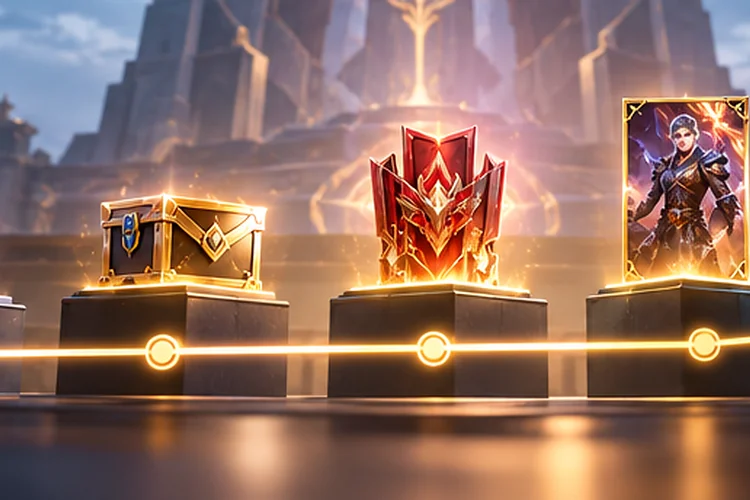
Event B divides that value across early milestones, intermediate checkpoints, and one larger completion reward.
For many players, Event B will feel more satisfying because progress remains visible.
Supercell’s updated Brawl Stars Championship structure demonstrates this approach. Its Championship Challenge awards a Chaos Drop every third win, while qualifier rounds provide additional rewards as competitors move forward.
This creates a rhythm:
play → reach checkpoint → receive something → continue.
The important part is not giving away more value. It is distributing value at moments that make advancement feel tangible.
A good reward curve should feel consistant without becoming completely predictable.
Front-Load Enough Value to Build Momentum
The beginning of an event is where players decide whether continuing is worth their time.
If the first meaningful reward requires several hours of competition, many participants may leave before becoming invested.
Early milestones should therefore arrive relatively quickly.
That does not mean giving away the best reward immediately.
A small amount of currency, an event chest, progression materials, or a cosmetic fragment can confirm that participation is producing something useful.
Think of the first reward as proof of value.
Once players have received something, they understand the loop and can estimate what deeper participation might provide.
This is particularly important in events aimed at both competitive veterans and more casual participants. Experienced players may chase ranking prestige automatically, while less competitive users often need nearer-term reasons to continue.
Early rewards create that bridge.
Increase Reward Value as Effort Increases
Reward frequency should not remain completely flat.
As event difficulty rises, milestone importance should usually rise with it.
Suppose players receive the same small chest after match two, match eight, and match twenty-five.
Technically, the event is rewarding progress regularly. Emotionally, however, later achievements may feel underwhelming.
Reward value should roughly reflect increasing commitment.
Early prizes can be small and frequent. Mid-event milestones should feel noticeably better. Late milestones can contain premium currency, prestigious cosmetics, rare resources, or other aspirational rewards.
Supercell’s Formula Brawl event used differentiated payouts based on prediction performance: every prediction produced at least one Chaos Drop, while correctly predicting first place produced more.
Players who correctly predicted all three winners could earn substantially more across the event.
The same principle applies beyond predictions.
Greater difficulty should usually create greater perceived value.
Separate Participation Rewards From Performance Rewards
Competitive events face an important tension.
Reward only winners, and weaker players may stop participating.
Reward everyone equally, and high-skill performance loses significance.
The solution is to create seperate reward layers.
Participation rewards can recognize time and engagement. Performance rewards recognize achievement.
For example, every competitor might earn event currency for completing matches, while higher placements provide exclusive cosmetics, titles, bonus currency, or leaderboard recognition.
Brawl Stars’ Trophy Road uses milestone rewards throughout progression while leaderboards separately recognize high-performing players. Its progression rewards include currencies, Credits, Power Points, XP Doublers, Starr Drops, and other resources.
This layered model works because different motivations coexist.
Casual competitors still receive something worthwhile.
Top players still have something difficult to chase.
Avoid Huge Empty Spaces Between Milestones
One common event-design problem is the reward desert.
A player receives several prizes early, then suddenly faces a long progression gap with nothing meaningful until the next major milestone.
Motivation often falls during that gap.
Instead, place smaller reinforcement between major rewards.
Imagine a 20-stage competitive event.
Major rewards could appear at stages 5, 10, 15, and 20, while smaller resources or currency appear between them.
GameRefinery frequently documents event systems that combine milestone tracks with additional reward layers.
Its 2026 market analysis noted exploration and event formats where players progress through clearly visualized milestone structures, sometimes with parallel premium and free rewards.
The psychology is straightforward.
Players should rarely feel that several sessions produced absolutely nothing.
Not every session needs an exciting prize, but every session should move visibly toward one.
Use Leaderboard Rewards Carefully
Leaderboards naturally concentrate rewards toward the top.
That creates prestige, but it can also create discouragement.
If players ranked outside the top 100 know they have no chance of receiving anything meaningful, many may stop competing well before the event ends.
A stronger structure combines ranking rewards with threshold rewards.
Players can earn something for reaching personal performance milestones regardless of final position, while top rankings still receive exclusive prizes.
GameRefinery has documented competitive event systems where the same points can feed both milestone progression and leaderboards, allowing players to gain threshold rewards while competing for higher placement.
This is especially useful in mobile games because the player population is highly diverse.
Only a tiny fraction can realistically finish first.
A healthy competitive ecosystem still needs thousands of others to believe participation matters.
Control Reward Inflation Across Repeated Events
Increasing rewards is easy.
Reducing them later is difficult.
If every new event gives more currency, more chests, and better cosmetics than the previous one, players quickly adjust their expectations upward.
Yesterday’s exciting reward becomes today’s minimum.
This is reward inflation.
The solution is not making rewards stingy. Instead, vary the type of value rather than constantly increasing the amount.
One event might emphasize premium currency. Another could focus on cosmetics. A third might provide progression resources, collectibles, prestige badges, or event-specific customization.
Unity’s LiveOps ecosystem includes economy, leaderboards, analytics, remote configuration, and other systems precisely because rewards need to interact with the wider game economy rather than exist in isolation.
Reward planning should therefore consider both engagement and economic impact.
Giving away a large amount of currency feels great today.
It may weaken progression tomorrow.
Match Reward Density to Event Duration
A four-day competition and a four-week seasonal event should not use identical reward pacing.
Short events need faster reinforcement because there are fewer sessions available.
Longer events can create wider spacing, but they still need enough intermediate progress to stop the reward track from feeling endless.
Think in rewards per meaningful session rather than rewards per calendar day.
If the average player completes three matches per session, the first milestone might arrive within those three matches.
Later goals can require multiple sessions.
The key is setting expectations.
Players should understand whether an event is designed for one evening, one weekend, or several weeks.
GameRefinery’s research into progression systems shows considerable variation in event and battle-pass cadence, with many successful systems tying recurring gameplay directly to milestone reward tracks.
Reward spacing should support that cadence rather than fight it.
Build Catch-Up Without Destroying Competitive Integrity
Players miss event days.
That is normal.
A purely progression-based event can offer catch-up bonuses relatively easily. Competitive events are more complicated because giving late players excessive advantages can feel unfair to participants who competed from the beginning.
The solution is to accelerate access without handing out performance.
A returning player might receive bonus participation currency, additional qualifying attempts, or easier access to missed baseline rewards.
Leaderboard points or championship ranking, however, should still require competitive performance.
This keeps the structure fair.
Catch-up mechanics should help players re-enter the event, not skip the competition.
That distinction is especially relevent in longer competitive seasons where missing several days should not automatically make participation pointless.
Use Rewards to Support the Core Gameplay Loop
The best event rewards encourage players to continue engaging with the broader game.
An event that distributes large amounts of irrelevant currency may technically look generous but produce little long-term motivation.
Rewards should connect back to something players care about.
GameRefinery’s 2026 market examples show live events increasingly linking battle passes, leaderboards, collectibles, event shops, and core gameplay into one progression ecosystem rather than treating them as isolated systems.
This creates stronger continuity.
Players compete, earn resources, use those resources elsewhere, improve or customize their account, and then return to future events with a stronger sense of investment.
The reward becomes part of a larger journey.
That is more powerful than simply adding another chest to inventory.
Measure Where Motivation Drops
Reward density should never be designed entirely from intuition.
Analytics can reveal where players stop.
Suppose completion rates remain strong through milestone seven but collapse between seven and eight.
That section deserves investigation.
Maybe the required effort jumps too quickly. Perhaps the reward preview does not look worthwhile. Maybe matchmaking becomes much more difficult.
GameAnalytics emphasizes retention and ARPDAU as important post-launch metrics, while also recommending cohort and LiveOps analysis to understand how players behave after specific features or events.
Useful event metrics include milestone completion, matches per participant, reward claims, return frequency, leaderboard participation, churn points, and post-event retention.
Do not simply ask which rewards players collected.
Ask where they stopped trying.
Those abandoned milestones often reveal more than the successful ones.
Avoid Making Every Reward “Legendary”
Presentation matters.
But constant celebration can reduce emotional impact.
If every small milestone triggers huge animations, dramatic sound effects, and “ultra rare” language, genuinely important rewards stop feeling special.
Create visual hierarchy.
Small rewards should be quick and satisfying. Mid-tier milestones can receive more attention. Major completion rewards deserve the strongest presentation.
This allows players to immediately understand significance.
The same logic applies to value.
Reward density is not simply “more rewards.”
It is the planned distribution of different levels of value.
A sustainble event uses frequent enough reinforcement to keep motivation alive while protecting a few moments that still feel genuinely important.
Reward density can determine whether a competitive mobile event feels motivating or exhausting.
Strong planning gives players useful early reinforcement, increases value as effort grows, avoids long reward deserts, and separates participation rewards from high-skill achievement.
Leaderboards can create prestige, but milestone rewards ensure the wider player base still has meaningful reasons to compete.
At the same time, developers need to control economic inflation and measure where players stop progressing.
For your next competitive event, map every reward against the expected time required to reach it.
If several sessions pass without meaningful progress, add a smaller checkpoint. If rewards appear constantly but none feels important, create more distance around major milestones.
The goal is not maximum reward volume. It is the right reward at the right moment.